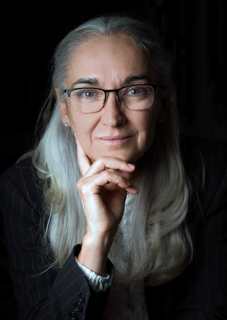
Eva Nogales, Ph.D., is a Professor of Biochemistry, Biophysics, and Structural Biology and a Howard Hughes Medical Institute Investigator. Her laboratory investigates large macromolecular assemblies essential to eukaryotic life, including the molecular machinery that regulates gene expression at the transcriptional and epigenetic levels and the dynamics of the microtubule cytoskeleton.
The epidemic of obesity and its associated comorbidities represents a medicinal challenge that warrants broad molecular diversity. In concert with multiple collaborators, my IU laboratory has pioneered the recruitment of endogenous hormones and physiological mechanisms optimized for pharmacological purposes to address the heterogeneity constituted by the multiple diseases associated with the metabolic syndrome.
Multiple lines of evidence have convincingly demonstrated tumor neoantigens as an important class of immunogenic tumor antigens, and have motivated the development of personalized cancer neoantigen targeting approaches. Neoantigens arise from amino acid changes encoded by somatic mutations in the tumor cell and have the potential to bind to and be presented by personal HLA molecules. As a field, we have now successfully moved beyond the first wave proof-of-concept studies that have demonstrated the safety, feasibility and high immunogenicity of these personalized vaccines.
Job Dekker, Ph.D., is a pioneering genome biologist whose research has transformed understanding of how chromosomes are organized in three dimensions within the cell nucleus. His laboratory developed Chromosome Conformation Capture and several influential technologies, including 5C and Hi-C, that enable scientists to map genome architecture at high resolution. Dr. Dekker combines experimental and computational approaches to investigate how chromosome folding influences gene regulation, genome stability, and disease, including cancer.
Wendy Chung, M.D., Ph.D. Boston Children’s Hospital, Harvard Medical School
Rare diseases are individually rare but collectively common and teach us about the underlying mechanisms of common diseases. Given how many rare diseases there are and how rare each is individually, how do we build sustainable infrastructure and synergies that will support the ecosystem of stakeholders trying to diagnose, prevent, and treat these conditions in an ethical and cost effective manner.
Gia K. Voeltz, Ph.D. Howard Hughes Investigator, University of Colorado
Gia Voeltz, Ph.D., is a Howard Hughes Medical Institute Investigator and Professor of Molecular, Cellular and Developmental Biology at the University of Colorado Boulder. Her research explores how the endoplasmic reticulum (ER) acquires its shape, interacts with other organelles, and contributes to cellular health and disease. Her laboratory investigates how ER membrane-shaping proteins and contact sites regulate organelle dynamics, including mitochondrial and endosomal division and fusion. Using cell biology, biochemistry, and electron microscopy, Dr.
Erol Fikrig, M.D. Yale University, School of Medicine
Erol Fikrig, M.D., is a leading physician-scientist in vector-borne infectious diseases whose research has advanced understanding of how pathogens, arthropod vectors, and mammalian hosts interact during transmission and infection. His laboratory studies Lyme disease, malaria, and mosquito-borne flaviviruses including dengue, West Nile, and Zika viruses. By defining the molecular and immunologic events that occur at the pathogen-vector-host interface, Dr. Fikrig’s work has revealed new opportunities to interrupt disease transmission.
Patrik Verstreken, Ph.D. VIB-KU Leuven Center for Neuroscience, Belgium
Synaptic dysfunction is an early pathological feature of Tau-associated neurodegenerative diseases, including Alzheimer’s disease. Targeting early synaptic dysfunction may offer therapeutic benefits by helping to prevent cognitive decline and disease progression; however, the mechanisms underlying Tau-associated synaptic defects remain unclear. Under disease conditions in patients and animal models of Tau-related disease, Tau becomes mislocalized to pre- and postsynaptic compartments. Recent work demonstrates that presynaptic Tau contributes to synaptic defects.
Leslie A. Leinwand, Ph.D. BioFrontiers Institute, University of Colorado Boulder
Over 50% of existing drugs were derived from the natural world. These include blood pressure-lowering ACE inhibitors and anti-coagulants from snake venom, and glucagon-like peptide-1 (GLP1) receptor agonists for type 2 diabetes and obesity from Gila monster saliva. We study pythons which are ambush-hunters that consume large meals infrequently (up to 100% of their bodyweight and up to >1 year between meals). During digestion, their metabolism can increase by up to 44-fold and most organs double in size.
This lecture will describe studies of HIV in mothers and their infants that began as part of a clinical trial to define the risk of breastfeeding transmission in Kenya more than three decades ago. The focus will be on studies of immune responses to HIV in this population, including how the studies benefited from collaborations with the trial investigators. The talk will also include new studies of innate immunity to HIV and identification of new antiviral host genes that were inspired by these translational studies.
This page was last updated on Tuesday, September 1, 2026